

Real money play at a casino in the UK means staking pounds from your own balance at a site licensed by the Gambling Commission, where deposits and withdrawals run through regulated payment methods and a self-exclusion request blocks you across every licensed operator. The advertised bonus is rarely the real cost; the terms attached to it usually are.

Table of Contents11
- The Promise, the Numbers, and the Bill Nobody Advertises
- What the Regulator's Own Benchmark Says About Getting Paid
- How Each Payout Route Affects Withdrawal Speed
- How Offshore Terms Write Delay Into the Paper
- Why The Licence Is The One Thing This Market Turns On
- Five Signs an Operator Can Be Trusted
- How to Judge a Real Money Casino Before You Stake
- Money Laundering Rules Are the Slow Lane Everyone Meets Eventually
- The Costs, Ranked by What They Actually Take From You
- Questions Players Actually Ask
- The Bill Arrives at the Cashier, Not the Homepage
The Promise, the Numbers, and the Bill Nobody Advertises
Every real money casino homepage makes the same promise: your money in, your winnings out, quickly and quietly. The industry's own figures suggest the second half of that promise mostly holds — Gambling Commission data covering June to September 2024 recorded 44.2 million withdrawals by customers of large online operators, of which 96.3 per cent cleared automatically and a further 3.5 per cent within 24 hours. Roughly 99.9 per cent inside two days. That is a good number, and offshore sites quote it back at British players as though it were theirs. It is not theirs. It describes operators holding a British licence, bound by British licence conditions, in a scheme that offshore sites simply stand outside.
The costs I care about on this page are the ones that never reach the headline. A wagering requirement is not a cost until you do the arithmetic and discover that a £100 bonus at 40× play-through asks you to turn over £4,000 before a penny leaves the account. A maximum cashout clause is not a cost until a win lands above the cap and the excess quietly evaporates. An identity check is not a cost until it arrives on the withdrawal screen rather than the deposit screen, holding your own money while the operator asks for a utility bill. The house edge is the honest cost, published and understood. These others are the ones that behave like a fee dressed up as a feature.
There is a plain legal point that belongs near the top of any page like this. Casino online uk real money services offered to players in Great Britain without a Gambling Commission licence are illegal to provide: section 33 of the Gambling Act 2005 makes it an offence for a person to provide facilities for gambling without an operating licence, and the Commission states plainly that this includes operators holding a licence in another jurisdiction. Offshore casinos, however polished the site, are not licensed in Great Britain. UK protections — the withdrawal rules, the fair-terms conditions, the complaints route, self-exclusion — do not apply to them. I will treat that as the baseline for everything below: British-licensed sites are the standard, offshore sites are measured against it, and some of them fail on their own terms rather than merely by comparison.
What the Regulator's Own Benchmark Says About Getting Paid
The benchmark worth holding up is the Commission's withdrawal dataset for June to September 2024. Across 44.2 million withdrawals at large online operators, 96.3 per cent cleared automatically, 3.5 per cent cleared within 24 hours, and 0.1 per cent took up to 48 hours. The Commission has separately said that around 99 per cent of withdrawal requests at some of the largest firms were approved, processed and fulfilled within 24 to 48 hours.
Now the sting. The same regulator has said for years that withdrawal problems are the number one subject of consumer complaints reaching its Contact Centre — around 2,000 a year by July 2024, and its Annual Report for 2024-25 confirmed withdrawals were still the cause of most complaints. Recorded complaints coded "Withdrawals and/or financial transactions" did fall from 2,416 in the year to December 2022 to 1,791 in the year to December 2025. Both things are true at once, and the gap between them is where the money hides: most withdrawals are frictionless, which makes the friction that does occur look like an exception rather than a mechanism.
Consumer research published in July 2026 captures the split well. Asked whether it is quick and easy to withdraw and collect winnings, 49 per cent of people who had gambled in the past 12 months agreed. Thirty-three per cent were neutral and 18 per cent disagreed. That is not a market with a widespread payout scandal. It is a market where roughly one player in five has met the terms on this page the hard way.
How Each Payout Route Affects Withdrawal Speed
The table below compares withdrawal routes by method, not by brand, because the method decides most of your timing. Figures come from the operators' own fee schedules and from payments infrastructure documentation, not from marketing pages.
| Withdrawal route | Typical arrival | Cost at the payments end | The catch to watch |
|---|---|---|---|
| Faster Payments bank transfer | Usually under 2 seconds between banks; scheme ceiling £1 million per transaction | No scheme fee; individual banks set lower per-payment limits | Scheme limits are ceilings, not entitlements; a large payout may be split |
| Visa Direct (card push) | Real time, funds often available within 30 minutes of approval | Set by operator or bank | Requires an eligible debit card and a bank on the scheme |
| E-wallet (Skrill, Neteller) | Hours to a day once released | 2.80% of the amount withdrawn, minimum about EUR 3.50 | Dormancy fee of EUR or USD 5 monthly after six months unused |
| PayPal | Typically one working day to a bank account | No fee to a UK bank account with no currency conversion | A failed transfer due to wrong bank details costs 0.50 GBP |
| Crypto — Bitcoin | About 10 minutes per block on target | Network fee only | Six confirmations is the usual merchant default, so nearer an hour |
| Crypto — USDT on TRON | Minutes where bandwidth and energy suffice | Roughly 13 TRX without staked energy, about 26 TRX to a new wallet | Fails outright if the account has neither energy nor TRX |
| Crypto — Litecoin | About 2.5 minutes to a first confirmation | Small network fee | Only about 55.43% of six-confirmation spans actually finish inside 15 minutes |
Two things in that table cost players more than they expect. The first is crypto: it looks instantaneous and is not, because the confirmation depth that a casino waits for is not the same as the moment the network sees the transaction. The second is the e-wallet route, where the operator's payout is instant and the withdrawal out of the wallet is the slow, charged part. Britain's Faster Payments scheme is the genuine article — over 90 per cent of transactions complete in under two seconds, and there is no minimum size, though individual banks impose their own caps well below the £1 million scheme ceiling.
How Offshore Terms Write Delay Into the Paper
An offshore site that holds no Commission licence is not connected to Gamstop Online, and that is reported consistently by trade sources rather than published as a regulator line, so I will hedge it as reported [unconfirmed]. What is not in doubt is the structure of the terms. Offshore casinos are not bound by the 10× wagering cap that applies in Britain from 19 January 2026, and welcome offers there commonly carry 25× to 40× play-through, with no-deposit bonuses running to 40×–60× against a €50–€100 cashout cap, per a 2026 comparison of casino terms [unconfirmed].
Delays offshore are frequently contractual rather than technical. Maximum cashout clauses cap what a bonus win can ever become — one offshore operator's published terms limit amounts withdrawable from bonus-generated winnings to 300 per cent of the credited bonus, voiding the excess. Maximum-bet rules punish a single large wager during wagering: one site caps stakes at 20 per cent of the deposited amount during bonus play and warns that breach may mean account closure and forfeiture of winnings. Bonus-abuse clauses let the house confiscate on definitions the player cannot audit — betting patterns including low-margin or equal-risk wagers, or moving from a low-weighted game to a high-weighted one after a large win.
Compare that with the British position, which is worth stating precisely because it is unusual. Licence condition 17.1.1 says a withdrawal request must not trigger a demand for extra information the licensee could reasonably have asked for earlier. Guidance states operators may not impose any maximum limit on the amount a consumer may withdraw from their deposit balance, with "you may withdraw up to £50 per day" cited as the exemplar of a prohibited term. The Competition and Markets Authority, whose undertakings bind operators across the market, requires that no maximum limit be placed on withdrawals and that funds not be confiscated for inactivity or for failure to supply identity documents. That is the standard. Offshore sites are not obliged to meet any part of it, and the well-run ones do not then charge you a hidden fee — they simply run on a different rulebook, and the player learns which one applies at the point of exit.

Why The Licence Is The One Thing This Market Turns On
If you take one structural fact from this page, take this: the licence decides everything else. Volume, speed, bonus rules, complaints, and whether self-exclusion has any effect at all all follow from where the operator's licence sits.
How it works the first time. An operator applies to the Gambling Commission for a remote operating licence and is then bound by the Licence Conditions and Codes of Practice, which run to hundreds of provisions. A single one of them, social responsibility code 3.5.5, requires participation in the national multi-operator self-exclusion scheme — a requirement in force since 31 March 2020, with the Commission having notified operators of that deadline in January 2020. In April 2020 it added that operators must check their entire customer base against GAMSTOP registrations at least every 24 hours, which also stopped registered people receiving direct marketing. Compliance is not voluntary and the Commission has acted on it: on 3 April 2020 it suspended the licences of two online operators for failing to integrate GAMSTOP by the deadline.
How it works later, and this is where the paperwork gets interesting. A licence is checked through the Commission's public register, and the Commission advises clicking through to confirm that the site's activities and domain names match what the register records. Licences are also not permanent and not unconditional: the Commission's Illegal Markets team has, since April 2024, issued 3,140 cease and desist and disruption notices — 2,032 cease and desist notices, 774 registrar referrals, 402 host referrals and 3 payment provider referrals — referred 447,778 Bing and Google URLs, and secured 287,961 removals. Across 160 illegal sites with traffic data, engagement fell by an average of 32 per cent after disruption.
The warning signs are concrete. A licence number with no clickable verification is a number, not evidence. A seal that does not redirect to the regulator's own verification domain is decoration. A Curaçao certificate showing a different domain name from the site you are on belongs to somebody else. And the Curaçao ground has moved under operators' feet: the National Ordinance on Games of Chance took effect on 24 December 2024, replacing the old master-licence model with direct licensing by the Curaçao Gaming Authority; the legacy orange sub-licence certificates ended on 15 October 2025; and the CGA has said its previous online portal will not return and a replacement verification mechanism is still being built. A historic /JAZ number, in the regulator's own words, must not be treated as proof of a current licence.
One more turn of the screw. The Commission issued an industry warning notice on 20 January 2025 about games from licensed operators appearing on unlicensed websites available to British consumers, noting those sites often target people who have self-excluded through GAMSTOP. The effect is worth spelling out. A Gamstop Online registration blocks you from every online gambling company licensed in Great Britain, for the term you chose — six months, one year, five years, or five years with auto-renewal. It cannot be cancelled during the exclusion period, and it stays in place after the chosen term ends unless you contact Gamstop to remove it. An offshore site is not a way round that. It is a site with no obligation to look, and no route back into the protections you opted into.
Five Signs an Operator Can Be Trusted
A licence you can verify in two clicks
Check the Gambling Commission's public register and confirm that the licence is live, that it names the right corporate entity, and that the domain you are on is listed. Anything else — a number on a footer, a "licensed and regulated" line with no jurisdiction — is not verification. A Curaçao seal must redirect to the regulator's own certificate domain and must display the domain you are actually visiting; if it shows a different one, it belongs to another operator.
Withdrawal terms that name no cap
Look for whether the terms place any ceiling on what you can take out of your own deposit balance, and whether identity documents are framed as something you may need at any point rather than only at the cashier. British licence condition 17.1.1 and the CMA undertakings make late information demands unfair; a site whose terms reserve the right to void winnings at its sole discretion has written the opposite into the contract.
Bonus arithmetic that survives a calculator
Find the wagering requirement, the game-weighting table, the maximum bet during wagering and the cashout cap, then multiply. A British-licensed bonus cannot exceed 10× wagering from 19 January 2026. Offshore offers at 35×–50× on welcome bonuses and 40×–60× on no-deposit deals [unconfirmed] are not illegal, but they are a different product wearing the same word. The Commission's own reasoning for capping at ten was that licensees would otherwise be "highly likely to introduce terms preventing customers cashing out bonuses", having seen requirements of up to 60×.
A named dispute route that is free to you
A licensed operator must let you refer an unresolved dispute to an approved alternative dispute resolution provider at no cost, once eight weeks have passed or a deadlock letter is issued. The approved list includes IBAS and eCOGRA. Both publish what they decide: eCOGRA's report for 1 October 2024 to 30 September 2025 records 911 disputes, of which 150 valid ones concerned deposits and withdrawals, with 17.8 per cent of completed disputes decided for the consumer. Ask who the ADR provider is and whether the site is on that provider's approved list.
Customer funds described in writing
Licence condition 4.2.1 requires an operator holding customer funds to say in writing whether those funds are protected on insolvency, at what level, and by what method — "not protected", "medium protection" or "high protection" — with the customer acknowledging receipt. A site rated "not protected" must remind customers of that every six months. And a licence is only half the answer: funds in a separate client account do not guarantee return on insolvency, and operators are legally allowed to hold customer money in overseas bank accounts.
How to Judge a Real Money Casino Before You Stake
- Verify the licence on the regulator's register, not on the site's footer. The Commission's public register lists licence holders and their domains, and the Commission advises checking that the site's activities and domain names match. Reason: a licence number copied into a footer proves nothing, and the register is the only source that cannot be forged by the operator.
- Read the withdrawal section before the bonus section. Find the stated processing time, the payment methods, whether any fee applies, and whether there is a cap on withdrawals from your deposit balance. Reason: this is the part of the product you will use at the moment you care most, and it is the part least likely to appear in advertising.
- Do the bonus sums in full and write the number down. Multiply the bonus by the wagering requirement, apply the game-weighting table, then check the maximum bet during wagering and the cashout cap. Reason: a £100 bonus at 40× is a £4,000 turnover obligation, and no welcome banner will ever say so.
- Check that the ADR provider is on the Commission's approved list, and note the clock. Complaints must be raised within the operator's own process first, and a dispute can go to ADR free of charge after eight weeks or a deadlock letter. Reason: some providers refuse disputes that bypass the internal route or arrive too late — 72.3 per cent of eCOGRA's invalid disputes had not been through the operator's process first.
- Set a deposit limit at account level before the first deposit and confirm it in writing. From 31 October 2025 operators must prompt customers to set a financial limit before their first deposit, must present it as the default option, and must remind customers to review it every six months. Reason: the limit is the one control that acts on the deposit side, before a withdrawal dispute can ever arise.
- Set up the national self-exclusion scheme and separate blocking software if gambling is a problem. Gamstop Online is free, blocks you across every licensed online operator and cannot be cancelled mid-term; Gamban and BetBlocker add a device-level layer, and most high-street banks offer a card-level gambling block. Reason: each layer catches what the others miss, and none of them costs the player anything to switch on.
A word on the popular shortcuts. Queries about a no id verification withdrawal casino uk real money, or a no account casino, are answered simply: a licensed British operator has to verify identity before you gamble, and licence condition 17.1.1 specifically forbids demanding at withdrawal what could have been asked earlier. There is no legitimate route to a real money account with no identity check at a Commission-licensed site, and a site advertising one is telling you which side of the law it sits on.
Money Laundering Rules Are the Slow Lane Everyone Meets Eventually
Identity verification is the single mechanism most likely to make a real money account feel hostile, so it deserves its own explanation.
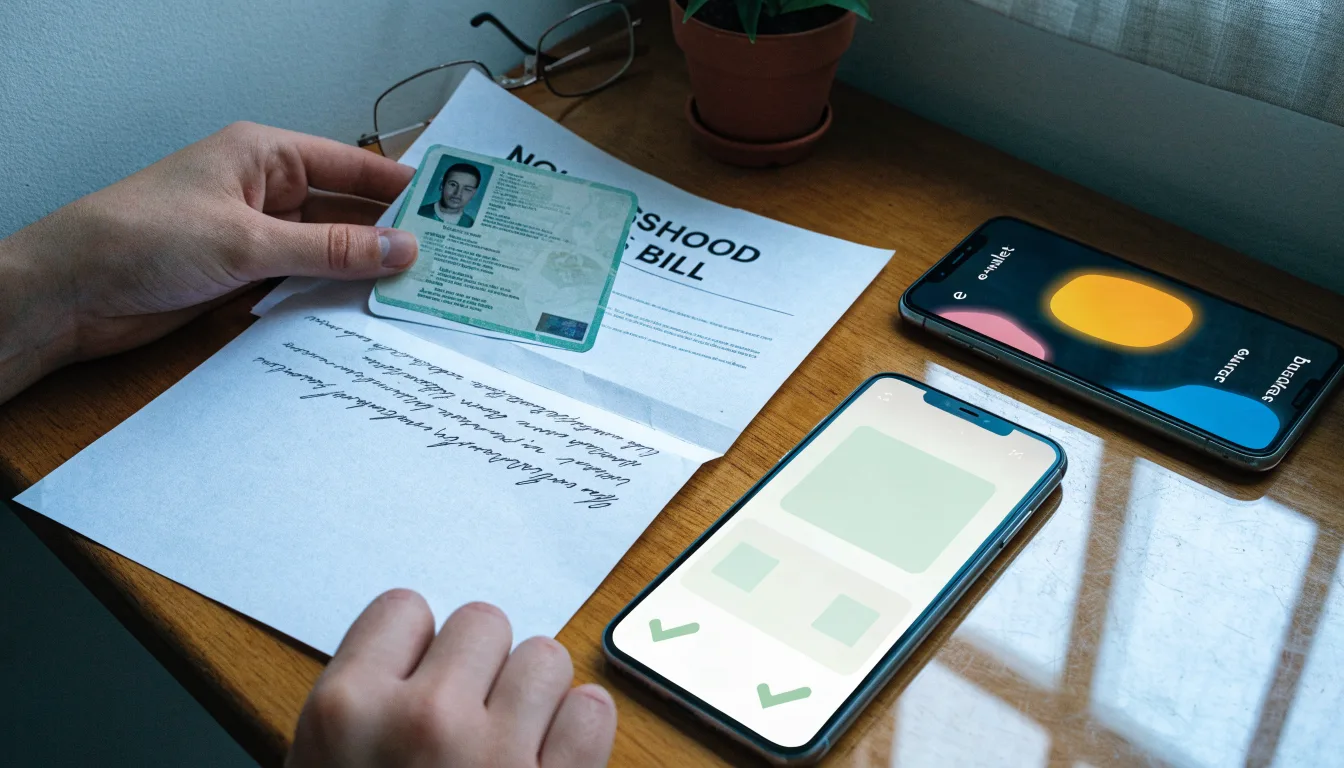
How it works the first time. Under the Money Laundering Regulations, remote casinos must carry out customer due diligence — identifying the customer, verifying identity against a source independent of the customer, identifying any beneficial owner, and assessing the purpose of the relationship — when a customer deposits or withdraws €2,000 or more, whether in one transaction or several that appear linked. British licence condition 17 goes further and requires identity to be established and verified before the customer is permitted to gamble at all. In practice an operator may identify you and verify your age at registration and defer full verification to the €2,000 threshold — the Commission's "hybrid approach" — or verify everything up front. Documents typically requested are passports, driving licences and household bills, though databases such as credit reference agencies and the electoral roll often settle it without documents. Electronic verification can be instant; a document request cannot be, and the Commission says plainly it cannot give a timescale because the process varies.
Then the warning signs. If documents are demanded only when you try to withdraw, that is the pattern the Commission calls out: over a quarter of complaints reaching its Contact Centre concern identity verification, and it has said onboarding on partial or equivocal verification is not sufficient. Third-party "fuzzy matching" worries the regulator enough to name it. Source-of-funds requests are legitimate under money laundering rules, but a business delaying a payout because of insufficient ID may be in breach of licence condition 17 — and it cannot confiscate your deposit balance on the basis that you have not provided documents. In the Commission's 2026 risk assessment the remote casino sector is rated high risk for money laundering, unchanged from before, on £5.0 billion of gross gambling yield in April 2024 to March 2025. A certain amount of friction is the price of that rating. A demand that arrives only at the exit is not friction; it is a business model.
The Costs, Ranked by What They Actually Take From You
Real money casino play in the UK is not a scheme, and the licence regime does real work. Total British gross gambling yield was £17.5 billion in the year to March 2026, up 4.4 per cent, with remote casino, betting and bingo at £8.3 billion. Something between 2.5 per cent and 9 per cent of online play is estimated to sit with unlicensed operators, depending on whose method you trust and whether it adjusts for VPNs — the Commission's own analysis, published 5 November 2026, estimates 2.5 per cent of people who gambled online in the past four weeks engaged with an illegal site.
Ranked honestly, the costs are: the house edge, which is disclosed and fair; the wagering requirement, which is disclosed and often ruinous; the withdrawal delay, which is sometimes legitimate and sometimes a lever; and the offshore rulebook, which is not a cost at all until it is the whole cost. None of that is a reason to avoid real money play. It is a reason to read the terms before the deposit, because after it the terms read you.
Self-exclusion, wherever it appears, is worth stating once more without decoration. A Gamstop Online registration holds for its full term and then stays in place until the person contacts Gamstop to remove it. The National Gambling Helpline, run by GamCare, is free on 0808 8020 133, 24 hours a day, every day of the year; GamFam, Gamblers Anonymous, NHS gambling clinics and Citizens Advice all offer routes for players and for families. None of them is operated by a casino, and that is rather the point.
Questions Players Actually Ask
What does casino online uk real money actually mean?
It means staking your own money for real, at a casino holding a Gambling Commission licence, where deposits and withdrawals run through regulated payment methods. Two things follow: the licence conditions apply, including the 10× bonus wagering cap in force from 19 January 2026 and the fair-terms rules; and self-exclusion through Gamstop Online blocks you across every licensed operator. An offshore site accepting British players looks the same and offers none of that.
How fast are withdrawals at a UK real money casino?
Fast, usually. Commission data for June to September 2024 covering 44.2 million withdrawals at large online operators shows 96.3 per cent cleared automatically, 3.5 per cent within 24 hours and 0.1 per cent within 48. Yet withdrawals remain the number one source of complaints to the Commission's Contact Centre, and complaints coded "Withdrawals and/or financial transactions" were still running at 1,791 in the year to December 2025.
Why do I have to send documents before a withdrawal?
Because money laundering rules require verification at €2,000 of deposits or withdrawals, and licence condition 17 requires identity to be verified before you gamble at all. What the rules do not permit is asking at the cashier for something the operator could reasonably have requested earlier — licence condition 17.1.1 forbids exactly that. Over a quarter of complaints reaching the Commission concern identity verification, and the Commission calls out late document demands.
Do offshore casinos have better no deposit bonuses?
They advertise larger ones, which is not the same thing. Offshore wagering runs at roughly 35×–50× on welcome bonuses and 40×–60× on no-deposit offers with a €50–€100 cashout cap [unconfirmed], and maximum cashout clauses can void everything above a stated multiple of the bonus. A British-licensed bonus is capped at 10× wagering since 19 January 2026, and no term may cap what you withdraw from your own deposit balance.
Is a no ID verification withdrawal casino realistic in the UK?
No, at any Commission-licensed operator. Identity must be verified before you gamble, and the €2,000 threshold for due diligence sits well above everyday play, so almost every real money account is checked at onboarding. Electronic verification through credit reference agencies and the electoral roll can be instant, which is why many players never see a document request. A site promising otherwise is a signal about its licence status.
What happens if a player self-excludes and then joins an offshore site?
Nothing good. Self-exclusion through Gamstop Online holds for its full term and remains in place until you contact Gamstop to remove it. Offshore sites are not connected to the scheme, so nothing screens you out — which is precisely why the Commission warned in January 2025 that unlicensed sites often target people who have self-excluded. The National Gambling Helpline is free on 0808 8020 133, 24 hours a day.
The Bill Arrives at the Cashier, Not the Homepage
Every real money casino sells the same thing — a fast deposit and a fast withdrawal — and the market's own numbers say the fast withdrawal is usually real, at least at British-licensed operators, where 96.3 per cent of 44.2 million withdrawals cleared automatically in the Commission's June to September 2024 dataset. What is not measured in that figure is what the player gave up to get there: a 10× wagering cap that exists because operators had been writing 60×, a licence condition forbidding late document demands because operators had been making them, and a complaints line still carrying 1,791 withdrawal cases in the year to December 2025. The house edge is the only cost on this page that everybody quotes honestly, and at £17.5 billion of British gross gambling yield in the year to March 2026 it is plainly the one the trade has made peace with.